Showing posts with label Reflections. Show all posts

Saturday, October 18, 2014

Beautiful Strangers: On Writing Diversity (Pt. 2)


What Are Stereotypes, Really? 
(AKA, Know Thy Enemy)

“If you know the enemy and know yourself, you need not fear the result of a hundred battles. If you know yourself but not the enemy, for every victory gained you will also suffer a defeat. If you know neither the enemy nor yourself, you will succumb in every battle.” 
- Sun Tzu, The Art of War

If you're here, it means my previous post didn't scare you off. Hooray! Before we dive in again, let's re-cap.

We've agreed the lack of diversity in mainstream fiction is problematic.

We've acknowledged we, as writers, have the power and the obligation to change this.

We've decided we want more diverse characters (main, minor, and everything in between) in our own writing.

So what now?

I've done a lot of thinking about this. If you're like me, you've spent so long walking on eggshells, it's hard to know where to start. How do you distinguish between the things you should handle delicately and the things that are, in fact, acceptable to print?

Here are just a few of the issues I've come up against in my quest to diversify my characters:

* When writing about racial minorities, do you describe skin color? If so, when, how, and how much?
* If your character is a lesbian, can she have a butch haircut and wear button-down shirts? 
* If your character is gay, how masculine/femme can or should he be?
* Can your villain be a minority (racial, sexual, or religious)?

I realize these may sound silly, but they are all things I've genuinely questioned and struggled with. The last thing I want is to propagate what Ray Bradbury so eloquently called "the terrible tyranny of the majority." I want diversity in my books, but it's not enough for me to simply shoehorn in a lineup of tired caricatures and call it a day.

I want to get it right. How do we get it right?

First and foremost, I think it helps to have an idea how to avoid getting it wrong. How do you know if what you're writing qualifies as a stereotype? Sometimes it's glaringly obvious, but not all stereotypes necessarily sound like stereotypes. At least, not right away. What to do?

Let's start small.

The following is copied directly out of the Merriam-Webster online dictionary:

STE·REO·TYPE 
transitive verb \ˈster-ē-ə-ˌtīp, ˈstir-\
: to believe unfairly that all people or things with a particular characteristic are the same
1
:  to make a stereotype from
2
a :  to repeat without variation :  make hackneyed
b :  to develop a mental stereotype about

This might also be helpful:

CAR·I·CA·TURE 
noun \ˈker-i-kə-ˌchu̇r, -ˌchər, -ˌtyu̇r, -ˌtu̇r, -ˈka-ri-\
: a drawing that makes someone look funny or foolish because some part of the person's appearance is exaggerated
: someone or something that is very exaggerated in a funny or foolish way
1
:  exaggeration by means of often ludicrous distortion of parts or characteristics
2
:  a representation especially in literature or art that has the qualities of caricature
3
:  a distortion so gross as to seem like caricature

Lest you think I'm deliberately patronizing you, let me explain.

In my last post, I said overly-P.C. language has muddied the issue and confused people. I believe that's a bigger problem than most of us realize or acknowledge. We're so terrified of producing "stereotypes" and "caricatures" that we've lost sight of what those words actually mean.

It's time for some clarity. What is a stereotype, really?

According to the above definition, "to stereotype" something means "to repeat without variation." In other words, if you're writing about a character who is, say, Muslim, and all your descriptions are recycled from media talk shows and the news, chances are your character is going to read like a stereotype. We've all heard this information. You are not providing anything new.

According to another part of the definition, the belief that "all people or things with a certain characteristic are the same" is also stereotyping. We've all seen those pics of the angry Muslim toting a submachine gun and stomping on an American flag*. I hope you don't need me to tell you such pictures are blatant stereotypes, and don't represent the majority of those out there who practice Islam.

*If this resembles a character you have or were planning to write, please visit a local mosque, talk to a few actual Muslims, and call me in the morning.

Now, for caricatures.

I have a love/hate relationship with caricatures. On the one hand, I have a drag queen in my noir romance series who is the most glitter-fied human being you will ever meet. Almost his entire character is caricature, from his bouffant beehive up-do to his pink silk pumps.

Note how I said "almost".

I think you really start running into problems when the caricature becomes the entire basis of your character. True, much of Cookie Mambo is caricature, but there's a lot more to him than just false eyelashes and fuchsia lipstick, and I'm having a lot of fun exploring that.

I'd also argue that there are appropriate and inappropriate usages of caricature. Look at some of the words in the definition: "funny", "foolish", "ludicrous". That suggests humor.

Not all characters are meant to be comic relief. Cookie Mambo is, and as a drag queen, caricature is literally his job. If that's not true for your character, I would avoid caricatures when describing them.

Phew! Still with me? This is a lot to digest, so I'm going to leave it at that for now. But never fear, I won't leave you hanging! There's still a lot more we haven't covered.

Stay tuned for...

Part 3: So What The Heck Do I Actually Write?


Friday, October 17, 2014

Beautiful Strangers: On Writing Diversity (Pt. 1)

Originally, the plan was to make this one post. As I sit down to write, however, it occurs to me a single post would barely scratch the surface of this vast, under-discussed topic.

Hence the "Part 1" in the title.  Here, we'll get the ball rolling and identify what I see as a major problem in literature today: the marked lack of diversity. The next post (or two) will offer some suggestions and pointers on what we, as writers, can do about it. 

Thanks for reading! I'm looking forward to the discussion...


"He who is different from me does not impoverish me - he enriches me... For no man seeks to hear his own echo, or to find his reflection in the glass."
-Antoine de Saint-Exupéry


Diversity, race, orientation, prejudice: all these are sensitive subjects for writers and non-writers alike. With that in mind, I feel I should start off with a few disclaimers:

Disclaimer #1:
I am not, nor do I claim to be, an expert on the subject of diversity in literature (or in general, for that matter). Way smarter people than I can and have tackled the philosophical, literary, and political aspects of diversity. 

Rather, the purpose of this series is to examine what diversity means for me as a writer, to encourage other writers to venture outside their comfort zones, and to offer some solid suggestions on how and where to start.

Disclaimer #2:
I will not attempt to comment on diversity in countries other than my own. I love you, citizens of the world, but let's face it, I neither know nor understand your particular cultural climate, at least not well enough to offer an opinion on it. 

For that reason, any anecdotes I use or observations I make will be drawn purely from my own experiences in the continental United States. Hopefully you will still find them useful, no matter where you live.

Disclaimer #3:
Some of what I say here may come across as politically incorrect. It's not my intention to offend anyone, and I sincerely hope I don't. 

That said, I believe overly-P.C. language has muddied the topic and left everyone confused. This subject is too important to sabotage with feel-good platitudes. I'm going for the jugular here. If that's a problem for you, I humbly suggest you utilize the nearest exit.

Still with me? Awesome! Now let's get real.

Confessions first: writing diversity has always scared the shit out of me. The reason for this (ready to get non-P.C.?) is that I'm white.

*crickets chirping*

As a conscientious modern white woman, I have trouble saying stuff like that. Hell, I even have trouble referring to myself as "white". It connotes painful images of race riots and people running around in bed sheets, things no one wants to be associated with.

Before you get the wrong idea, I'm not going to start whining about "reverse-racism", or anything like that (for an excellent article that sums up my views on that particular subject, click here). That's not my point, and it's not the point of this post.

My point is, I don't think I'm the only writer who has struggled with this, and rather than risk offending people, many of us have simply opted out of writing diversity altogether.

A quick scan of Amazon Kindle's categories for Fiction tells a depressing story. Of the major genres (Mystery/Thriller/Suspense, Science Fiction/Fantasy, and Romance), only Romance has sub-categories for non-white, non-hetero titles. On one hand, this isn't particularly surprising; the Romance genre has more sub-categories and sub-sub-categories than an IRS tax form.

Where it gets depressing is when you start looking at the numbers. I'll stick to Romance, both because it's the genre I write in, and because it's the only genre with any actual data. Here are a few numbers to consider (current as of Oct. 17, 2014). Please note, in the interest of simplicity, they have been rounded off: 

# of titles in the Romance Genre: 212,000
# of titles in the African-American sub-genre: 5,000
# of titles in the Multicultural/Interracial sub-genre: 4,300

The LGBTQ categories don't do much better, though the popularity of M/M romance has skyrocketed over the last few years: 

# of titles in M/M and Gay sub-genres*: 12,000
# of titles in the Lesbian sub-genre: 3,000

* On Amazon, M/M Romance and Gay Romance are categorized under the blanket heading "Gay Romance", despite the fact that there are significant differences between the two. For more information, check out Yaoi Research's article, On Defining M/M Romance.

If these numbers have gotten you thinking, I'm glad. They got me thinking, too. But even these don't tell the whole story. 

What about books not intended as African-American/ Multicultural/ Interracial fiction? Not all heroes/heroines will be --or need to be-- Beautiful Strangers (term coined -as far as I know- by SF author Nisi Shawl).

To me, the biggest problem isn't necessarily the dearth of culturally diverse sub-genre books. Rather, it is the insidious absence of any non-white, non-hetero main, minor, secondary, tertiary, or quaternary characters at all, period.

Which brings me back to my initial confession. 

We're all afraid. We're afraid of rubbing someone the wrong way. We're afraid of "getting it wrong". We're afraid that for all our research, care, and best intentions, we're still going to end up with this guy:


I get it. Believe me.

The problem isn't being afraid. The problem is being controlled by our fear. In our desperation not to offend, we've inadvertently created a literary landscape that is glaringly one-dimensional. It's time to own that. And it's time to change it.

If that scares you, awesome. It means you're seriously considering leaving your comfort zone. That's the first step, and you should give yourself a pat on the back for taking it.

I'm going to end this segment with a bit of good news: 

WE'RE WRITERS, PEOPLE! 

If anyone has the ability, the brains, and the compassion to take this issue on, it's us. We see more, hear more, feel more, and intuit more than your average shmuck-on-the-street. It's what makes us so good at what we do. 

It's why we do what we do in the first place.

So who's with me?

###

Friday, June 27, 2014

Research Trip! Fort Mason

Those of you who know me know I value my day trips.

Writing is a solitary business. Most of my time is spent at a desk, swigging cold coffee and tossing back Ibuprofen to combat lower back pain. What can I say? It ain't always sexy, folks.

Which is why I seize any excuse I can to venture out into, you know, The Real World.

I am fortunate enough to live near the city that has become my Muse. San Francisco is one hell of a town. Every time I go there (which I do, as often as time and gas prices permit), I discover something new, something wonderful, something that would be perfect in a book.

One of my recent trips took me to Fort Mason. This old Army installation is located on the waterfront at the edge of The Marina district.


Today, the old officers' quarters have been transformed into rent-able living spaces and a youth hostel. As you can see (below), there is also a lovely community garden (this is San Francisco, remember?)


(Below) Part of the city skyline from the recreation field at Fort Mason.


(Below) And more of the city skyline. This is a view out over The Marina and Cow Hollow districts. And of course, the Golden Gate out in the distance.


(Below) Another gratuitous Golden Gate shot, over the rooftops of Lower Fort Mason.


(Below) And another, from a slightly different position, and with the masts from the marina in the middle.


But the coolest part of the trip? Check this out (below): the abandoned entrance to the old San Francisco Belt Railway! I read about this online, and it was the main reason I wanted to check out Fort Mason. Well, I found it, and yes, it's every bit as awesome as I thought it would be!


Now, I'm what you might charitably call a "geek," especially when it comes to history. I've also traveled a fair bit. Most other cities I've visited are purely modern creations. History is bulldozed, paved over, shoved aside. While in many cases this makes perfect economic sense, it is, nonetheless, sad.

San Francisco is one of those magical places that hasn't tried to hide or cover up its colorful past. Rather than pave over history, the modern city of San Francisco is literally built around it.

You see it in obvious things, such as the still-functioning street cars and the obviously-old buildings. But you can also see it in more subtle touches, such as the long-obsolete etchings in the sidewalks on Market Street that mark where telegraph lines used to run.

With so many layers to peel back, I doubt I'll be running out of inspiration -or excuses to visit- anytime soon.


Friday, February 14, 2014

Bad Reviews Suck. Except When They Don't.


“From my close observation of writers... they fall into two groups: 1) those who bleed copiously and visibly at any bad review, and 2) those who bleed copiously and secretly at any bad review. ” -Isaac Asimov

I can't think of many authors who actually like bad reviews.

Understandable, right? I mean, no one likes to hear that the book they worked so hard on, their literary baby, didn't resonate once they released it into the world. Or worse, that its very existence outright offended someone.

I'm coming to the keyboard having received my very first bad review this week. And I'm not talking about one of those "nice try, better luck next time" reviews. The reviewer hated everything about the book, from front cover to back.

But I'm not here to vent. Or cry. Or bitch.  Because guess what?

There's nothing wrong with that.

If anything, I'm glad they wrote that review. Because while it may have stung, it also forced me to do something I've never really had to do as an author: I had to do a little soul-searching.

They were very specific about the things they didn't like. And nothing they said was wrong. Most of what they listed were things I had done with great intent. A couple weren't, and thanks to them, I have some new ideas on what to work on (and hopefully improve) in my next book.

But what about the things I knew about? The things I had done intentionally, that they didn't like? That's where the soul-searching came in.

As authors, it's important to be able to take criticism. Many of us can't- at least, not well. But it's equally important to know where and when to stand your ground. Not everyone is going to like the books we write. Does that mean we should try to write to suit every audience?

Absolutely not.

Sometimes it takes a pinch in the soft place for us to decide to stand our ground. Stand by our characters, our style, our story. To write with passion means to risk alienating some people, some of the time.

So I appreciate that bad review. I'm grateful to the reviewer for giving my book a chance. I hope the next thing they read will be something they enjoy.

But if you'll excuse me, I have another book to write.

Wednesday, December 11, 2013

Research Trip! Warm Water Cove, San Francisco

"Ogling ruins is a way of meditating on our own inevitable deaths... A humbling reminder that, yes, it all does return to dust..." 
-David Byrne, JOURNAL 3.26.06

There's a lot to be said for city planning.

It started with the ancient Romans, the first civilization in history to create cities on a grid, with straight streets and geometric neighborhoods. The lack of such planning was one of the hallmarks of the Dark Ages, and its reemergence signified the return of order and peace in the Western world.

It is also highly overrated.

Need proof?

I give you Warm Water Cove. 

Located in the Dogpatch neighborhood of San Francisco's Potrero Hill district, this "park" was once a favorite haunt of punks, junkies, vagrants, and other anarchist types. Vibrant graffiti blazed on the surrounding walls. People gathered along its jagged shoreline to zing golf balls into the Bay, or meditate on the extensive collection of tires half-buried in the sludge below. 

It was a place devoid of planning. Untouched by city officials. Unmarred by civility. Graced with its own harsh culture and terrible beauty.

Until society decided to take it back.


(above: The Toxic Golf Course)

Armed with a sense of civic duty, volunteers marched into the park and painted over the Graffiti Gallery. Native plants were painstakingly transplanted into the rock-hard ground. Bums were kicked out, trash removed, used hypodermic needles picked out of the chaparral.

Some called it an improvement.


(above: remains of the Muni Graveyard)

And it almost worked.

Warm Water Cove is an industrial wilderness. It always will be. And like all such places, it has its own unique ecosystem. Life shouldn't be able to exist here at all. The water is dark and oily, the soil dead and devoid of nutrients. 

But life is tenacious. The so-called "native" plants are slowly being muscled out by the ugly, rangy weeds that always held pride-of-place. Broken glass shimmers from the carefully carved paths that snake around the park. The Graffiti Gallery, though still a shadow of its former glory, is being reclaimed inch-by-inch. 


(above: Graffiti Gallery, 2.0)

I am pleased to report the attempted gentrification of Warm Water Cove has failed, at least for now. There was one thing the city planners didn't account for: the sheer audacity of the wild soul. But all around it, condos are springing up, and yuppie culture is taking root. Civilization encroaches.

Is this a good thing?


(above: Tire Beach)

The human mind needs chaos, maybe even more than it needs order. We need places safeguarded from the whitewashing effect of civilization. Places where we can retreat. Take our wildness out from under our jackets, admire it for a little while. Warm Water Cove used to be such a place. There aren't many left.

Strange though it sounds, I hope it stays dirty and cold and raucous and rank. From what I've seen, odds are good it just might.

Saturday, September 28, 2013

When Did "Romance" Become A Dirty Word?


"I had a romance novel inside me, but I paid three sailors to beat it out of me with steel pipes." 
-Patton Oswalt

What does the literary community have against romance novels?

This is a question I've been asking myself more and more lately. When was the last time you heard anyone professionally affiliated with the book world seriously discuss or review a romance novel? I mean, a romance novel that wasn't 50 Shades Of Grey?

Anyone? Anyone?

Every time I hear a professional reviewer, critic, or commentator deign to mention romance, it is with a smirk, a snort, or a disparaging remark. At best, romances are dismissed out of hand. At worst, they are called "fluff".

When did "romance" become synonymous with literary dross? Have people forgotten the numerous classics that are also -gasp- romance novels? Here are a few to refresh our collective memories:
-Pride And Prejudice
-Sense And Sensibility
-Wuthering Heights
-Jane Eyre
-Lady Chatterly's Lover
-Anna Karenina
-Romeo And Juliet
-Much Ado About Nothing
-The Taming Of The Shrew

I grant, there are plenty of romance novels out there that meet the definition of "fluff". But I don't understand why people treat that as a bad thing. Many of Shakespeare's romantic plays were "fluff". Does Shakespeare count as "literary dross"?

If so, this is news to me.

There are also plenty of other romance novels that use love stories to delve into deep human and political issues. Why are these not taken seriously? What better way to understand these issues than through the one thing we all have in common?

Seriously, is this just me?

Wednesday, September 11, 2013

Memory

Some anniversaries you don't want to remember, but know you can never forget.

#911 #9-11

"The world breaks everyone, and after, some are strong at the broken places." 
-Ernest Hemingway


Monday, September 9, 2013

Decisions, Decisions: When To Go With Your Gut, And When To Stick To The Plan


"I love it when a plan comes together!" -Hannibal

I like plans.

Meal plans, chore plans, wardrobe plans, travel plans. When it comes to my writing, I'm a plotter. I rarely start anything without having a plan first. Plans are delightful. Plans work for me.

Except when they don't.

It all started when I was almost finished with my most recent book. The plan was, it would be the first book in a trilogy. I'd even started planning the next two books, but hadn't gotten very far (read: I knew the primary, secondary, tertiary, and quaternary characters, the titles, and the plots).

But then I had this idea.

You know the Greek myth where the goddess Athena springs, fully formed, from the head of Zeus? It was like that, only instead of a Greek goddess (I'm pretty sure Sherrilyn Kenyon has the rights to those), this was a story.

Okay, seven stories.

It was a tough call. I was already invested in the trilogy, and what I had in mind for the new series was a massive project. My brain rebelled against shucking an entire notebook's worth of work to start over on something else. I had to stick to the plan.

That's when it struck me. Wait a minute. I'm an indie. Whose plan do I have to stick to, exactly?

Planning is great. It's the only reason I'm able to crank out books at the pace I do. But sometimes, your plans hamstring you.

Sometimes, you have to go with your gut instead.

Curious about my new project? For a sneak preview of the first book, check out its Pinterest board.


Friday, July 5, 2013

Thursday's Children Blog Hop: Pangs Of Absence

Flower Gardens


"If I had a single flower for every time I think about you, I could walk forever in my garden." -attributed to Claudia Ghandi

Have you ever said a goodbye that didn't feel right?

I had another post planned for this week, but this subject has weighed heavily on my mind since, well, this morning. When someone I thought I'd said goodbye to for good suddenly popped up again in my life.

I won't bore you with the gory details, but suffice it to say, when I was younger, I went through a rough patch. It resulted in a cleansing; there were people I needed to remove from my life, so I did.

Unfortunately, it also meant having to say goodbye to a few people I'd rather have kept around.

It's never sat well with me, especially since -being young and tactless- I handled the whole thing with about as much grace as a falling elephant. I burned bridges, I hurt feelings, I made a mess.

Then I rebuilt, and learned to live with the bad taste in my mouth.

I'm at a better place in my life now, but I still have regrets. The kind that linger. That show up in your dreams just when you think you've finally put them behind you.  A chance meeting today got me thinking: maybe it's time to make amends.

I was thinking about it, and it suddenly struck me. Much of my writing has to do with moving on. Moving on from past hurts, from people who've wronged you, from grudges once held.

Maybe it's time for me to stop just writing about it, and start doing it.

Tuesday, June 11, 2013

Excuses, Excuses...


"When asked, 'how do you write', I invariably answer, 'one word at a time.'" -Stephen King

So! Bet you've been wondering where I am!

No? Whatever.

I've made some promises regarding this blog. Promises about what I'll post. When I'll post. And I haven't kept any of them the last couple weeks.

So for anyone who keeps coming back and checking to see if I've written anything new, you are so unbelievable awesome and I love you! I'm sorry I've been scarce. It's not you, baby, it's me.

I wouldn't be such a flake if there wasn't a good reason. You see, I've set some pretty ambitious goals for my new book. I'm pushing like hell to finish the first draft by the end of this month- next month at the latest.

It's a stupid amount of work.

The laundry's piled to the ceiling, the bathroom is growing its own ecosystem, and all the takeout is starting to taste the same. But damn it, I set a goal. And apparently, if it's something I'm passionate about, I take those rather seriously.

So there it is.

I'll be scarce a while longer. Remember: stupid amount of work. I try to pop in on The Twitter regularly, so if you want to say hi, by all means, look me up (@writermama). I respond to all @'s, even the snarky ones.

Now if you'll excuse me, time to get back to work.

Wednesday, May 22, 2013

Thursday's Children Blog Hop: Mob Rule


"Solitude is strength; to depend on the presence of the crowd is weakness.  The man who needs a mob to nerve him is much more alone than he imagines." -Paul Brunton

Many of you probably know by now I recently visited Seattle.  What you may not know is my visit there coincided with a riot.

Last year, the May Day Protests gained Seattle national attention.  Originally billed as a peaceful march supporting immigration reform and workers' rights, the situation deteriorated into one rife with violence and opportunistic vandalism.

This year, I was in Seattle on May Day.

My husband, son, and I were walking around downtown Seattle that morning.  Someone mentioned to us there was a protest planned for that afternoon, and we should clear out.  My husband and son took the Light Rail back to our hotel.

I pulled up the camera on my phone, staked out a spot on a high balcony overlooking everything, and waited.  The things we do for research.

From a writer's perspective, a riot is a fascinating thing to witness.  While I was not present for the actual riot itself (and there was one, though not as devastating as last year's), being there for the build-up and the aftermath provided some interesting insights.

1) Emotion is electric.  People often speak of being able to "feel" the tension in the air before something bad happens.  This is legit.  Everyone was fairly crackling with nervous energy, from the storeowners, to the police, to the people on the street.

There was also a faintly violent undertone that was both intriguing and telling.

2) Mobs feed on passion.  As was the case last year, this year's protests were supposed to be just that: protests.  Despite this, it's easy to understand how a protest can devolve into a riot.

After all, they both feed on the same key ingredient.

Protests depend on passion to be effective.  Riots depend on passion too.  And if you gather together a large group of people who feel strongly about something, it's shockingly easy for that passion to turn septic.

3) You can often tell who is who at a protest-turned-riot.  There are a lot of indicators who is there to protest peacefully, and who is there to wreak havoc.  Clustering into groups, deliberate boisterousness - or, conversely, cold isolationism- and overall attention-seeking behaviors are some.

How people look/present themselves is another.  This is an uncomfortable topic.  It smacks of profiling and prejudice.  But while it should never be the only consideration, it can provide some insight.

In the grand scheme of things, May Day 2013 was fairly benign.  Over almost as soon as it began.  I can't claim to know everything about mob rule because of it.  I had rejoined my family before the real craziness started.

Hell, I wasn't even teargassed.

But what I witnessed was pretty powerful stuff.  If you're a writer, you spend your life seeking to broaden your understanding of the human experience, if only so you can accurately translate it later.

Thanks to May Day, I understand one part just a little bit better.  

Photos I Took

(above) the square at Westlake Center before the first protest march

(above) the first march; already, you can see some people who look like they might be there for something else...

(above) aftermath of the second protest/riot; police blockade at the top of Capitol district

Wednesday, May 15, 2013

Thursday's Children Blog Hop: View From The Wild Blue Yonder

 
The World is a book, and those who do not travel read only a page. -Saint Augustine

I missed you guys!

In case you were wondering where I'd gotten to, I just got back from a two-week family road trip.  My husband works super hard so I can write and take care of our son, and I haven't had a sabbatical since I started work on All That Glitters.  Almost two years ago.

Needless to say, it was high time we all took a break.

We drove from our home in the San Francisco Bay Area up to Seattle, Washington.  Stayed a week, visiting friends.  Drove back down to visit a friend in Eureka, California, then continued on down to San Diego.  We puttered around there for a week and reconnected with some more old friends.

In case you couldn't guess, we have friends pretty much everywhere.

In honor of our safe return, I thought I'd share some photos I took during our travels.  We had a grand time, and I even got some research in for future books.  Enjoy the photologue!


(above) View of the streets of Seattle from underground.  We took the official tour.  So cool!  The "skylights" are laid into the sidewalks.  I have visions of setting a future novel here.


(above) View of nighttime Seattle from a friend's rooftop. 


(above) Catching a late-night blues show in Eureka, California.  The harp player is a friend of ours.  I used to go to blues jams every week back when I lived in Redding; it felt good to reconnect with the scene!


(above) The Pacific Beach Pier, San Diego, California.  My husband and I used to walk here back when we were still dating.  It was fun reenacting that- even toting along a tired toddler who wouldn't stop screaming...

 <!– start LinkyTools script –> <!– end LinkyTools script –>

Wednesday, April 24, 2013

Thursday's Children Blog Hop: Shivs, Slugs, And Shamuses


"Aw, lay off the business. It's like any other business, only here the blood shows." -Midge Kelly, Champion (1949)

I love a good, hard-boiled detective story.

You know the kind I mean.  The Big Sleep.  The Maltese Falcon.  The Kinsey Milhone mysteries.

I've been watching film noir for years now.  Recently, I realized it's been influencing my writing that entire time, even though I didn't always realize it.  There are a few things they all have in common that continually resonate with me:

1. Flawed heroes.  I love noir heroes.  The best ones are jaded, tortured, self-deprecating, and yet are tasked with protecting what little good exists in the world.  They always come through in the end, but far from being made whole by the journey, oftentimes they're left even more tortured than when they began.

2. Sympathetic villains.  Noir heroes and noir villains are opposite sides of the same coin.  Noir villains are the physical embodiments of the worst aspects of noir heroes.  Everything they do, the hero can understand, even empathize with, because deep down he's thought of doing the same thing himself.

3. Intense locales.  Noir settings play as much a role in the story as the characters do -in fact, they are often characters in their own rights.  Dark, ominous, they aid the villain and force the hero to rely on his wits to solve the mystery and stay alive.

4. Femme fatales.  If the noir villain is the opposite side of the hero, the femme fatale is the hero.  In an interview discussing his new noir series, Daniel Handler (aka Lemony Snicket), put it best: "They're both making their own moral path through a world that is sinister and secretive. ...(they) are unapologetic about making their way in a world that seems to have no place for them."

5. Uncomfortable endings.  Don't watch a film noir if you're looking for a warm, fuzzy, Happily-Ever-After.  True noir rarely ends well.  Sometimes the good guys don't come out on top, and even if they defeat the villains, it is usually a hollow victory.

A lot of these elements have showed up in my writing.  Now that I've lifted them from my self-conscious, I expect they will even more in the future.

Not familiar with film noir?  Here are a few of my favorites to get you started:
Laura
Gilda
The Maltese Falcon
The Lady From Shanghai
The Big Sleep

<!– start LinkyTools script –> <!– end LinkyTools script –>

Wednesday, April 17, 2013

Thursday's Children Blog Hop: Body Art

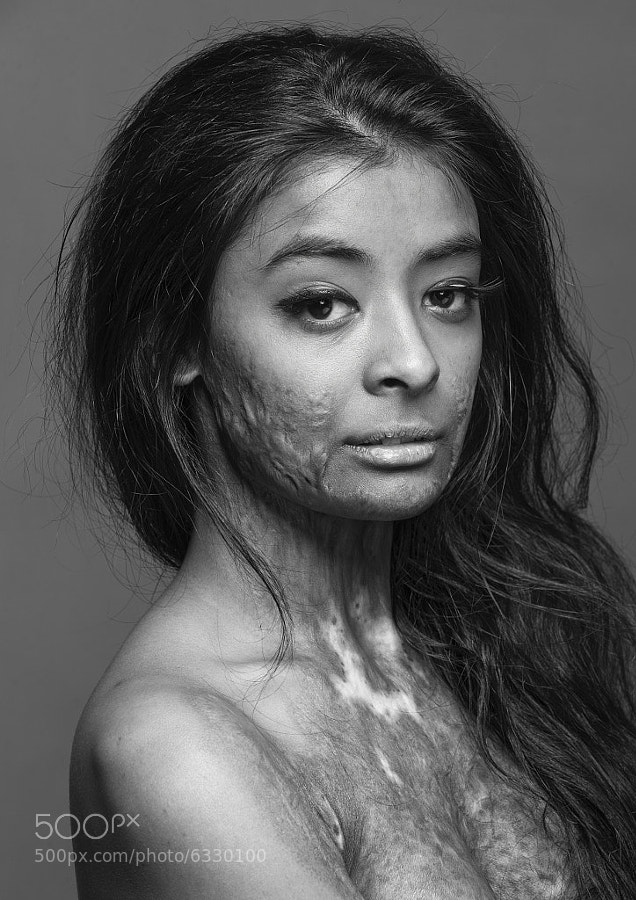
http://pcdn.500px.net/6330100/5dc19377aa07cc6f288404705eb877f3d680b601/4.jpg


 “The wound is the place where the Light enters you.” -Rumi

I've been fascinated by scars since I was a kid.

Every scar is different.  Some add a dash of character.  Others horribly disfigure.  But all require the bearer to reevaluate a piece of their identity.

Scars are the body's way of healing itself.  It's almost miraculous, really.  Even if the object that caused the initial wound is still lodged inside, the body will weave a web of scar tissue around it.  The object becomes part of the body it injured.

When I was in high school, I had a friend who had been badly burned as a child.  She carried scars over 60% of her body.

She was one of the most beautiful people I'd ever known.

She bore her scars with the confidence only acquired by survivors of terrible things.  She was smart.  She was funny.  She was a force.

I've always wondered about the journey it takes to get to that point.

As writers, most of us start with scarred characters -if not physically, then emotionally.  Their internal struggle often makes up the meat of what we write.  At least, it does for me. 

It's not often in our society we get to meet tough -truly tough- people.  Most of the scarred people I've talked to are strong, kind, wise beyond their years.  They've integrated their scars into their personal view of themselves, and they are never the same.

If anything, they're stronger.     

<!– start LinkyTools script –> <!– end LinkyTools script –>

Monday, April 15, 2013

How Tough Is Too Tough For A Romance Novel?


"A black pool opened up at my feet. I dived in. It had no bottom" -Dick Powell, Farewell, My Lovely 

Romance is not traditionally known as a "gritty" genre.

In one of the first reviews I received for All That Glitters, the reviewer commented on how I had the villain take a life.  She wasn't put off by this- in fact, I got the impression she saw it as a plus- but the fact that she mentioned it at all was telling.

Vivid descriptions of violence or brutality used to be reserved for, well, every genre but romance.  Romance was where you came for the warm fuzzies, the champagne bubbles, the Happily Ever After.  Too much grit was deemed inappropriate.

But romance is changing.  All the genres are.  Self-publishing, especially, has broken, reformed, and broken all the rules again.  Authors have more leeway to write the books they want to write, and readers have access to stories that previously never made it past the editorial board.

So in a literary world where there are no hard-and-fast rules, how do you know when you've crossed a line?

There seem to be different standards for different romance subgenres.  Romantic suspense, for example, can get away with more violence than contemporary romance.  In dystopian romance, violence is almost required.  Inspirational romance allows for nearly none.

Personally, I'm playing things by ear.  My story ideas lend themselves to a higher level of violence, so I go with it.  So far, the response has been positive.  I think romance readers are ready for more "toughness" in the genre.

And finally, writers are in a position to deliver.

Wednesday, April 10, 2013

Thursday's Children Blog Hop: Ode To The Asshole


"I'm not a tough guy.  I'm just delivering the truth and the only truth and if you can't deal with it, too bad." -Kevin O'Leary

In a previous post, I talked about what constitutes a "tough" woman (if you missed "Ode To The Bitch", you can find it here).  I wanted to talk about women because oftentimes, tough women are a mystery.  But that post got me thinking.

What about men?

Tough guys have been reduced to caricatures in our society.  The street thug.  The gangbanger.  The dumb goon.  "Toughness" in men is associated with being dangerous, mean, even abusive.

I have a different idea of what it means to be tough.

I've known a lot of tough men.  To the person, they blow the stereotypes out of the water. 

Here's what they've taught me about what it really means to be a tough guy.

Tough guys don't advertise.  If you have to tell someone you're a tough guy -by how you talk, walk, or dress- odds are you're not as tough as you think you are.  The toughest guys I've ever met look just like everyone else... until someone crosses that uncrossable line.

Then watch out.

Tough guys crack jokes, not just skulls.  All the tough guys I've met are rib-shatteringly funny.  I don't know why this is.  Maybe it's a way to diffuse a bad situation before it develops- I honestly have no idea.

It's not exactly a requirement, but if you come across a guy with a wicked sense of humor, odds are, he can hold his own when it's called for.

Tough guys look out for those weaker than them.  This includes women, children, old people, even other men.  Anyone who takes advantage of or tries to intimidate others isn't a tough guy; he's a bully.

Tough guys take care of themselves.  I'm not just talking about in a fight.  They can sew a button, do their own laundry, throw together an edible meal.  True tough guys don't rely on other people to look after them.  They look after themselves.

Tough guys don't start fights- they finish them.  You won't find a tough guy picking fights.  Tough guys know the damage they can do, and in most situations, would prefer to just walk away.

But don't think that means they won't fight.  Hurt someone they care about or throw the first punch, and they'll make sure you never make the same mistake twice.

Tough guys need tough women.  Relationships succeed when both parties are equal.  The only person equal to a tough guy is a tough woman.  She sees through the bluster and the bullshit, and knows a tough guy will treat her the way she deserves.

The opposite is also true.  Tough guys look at a woman other people might dismiss as a "bitch", and see someone who will be able to keep up.  Plus, they love a challenge, and nothing is more challenging than winning a tough woman's heart.

They may not draw attention to themselves, but there are still tough guys out there, if you know where to look.  They are infinitely more interesting -and infinitely tougher- than anything Hollywood could come up with.

And they're the men I choose to base my heroes on.

<!– start LinkyTools script –>
Powered by Linky Tools
Click here to enter your link and view this Linky Tools list…
<!– end LinkyTools script –>

Monday, April 8, 2013

Ode To The Bitch

"My grandmother was a very tough woman.  She buried three husbands, and two of them were just napping." -Rita Rudner

I love writing about tough women.  My heroines can give a punch, take a punch, take a shot, ride a motorcycle, dance, sing, play an instrument.  If that's not tough, I don't know what is.

But how do you know whether a woman is tough, or just a cunt?  One is not synonymous with the other.  I've known lots of incredibly nice, considerate women who were tough as old boot leather.  I've also known plenty of women who thought they were "tough", but really were just jerks.

So what criteria do I use when creating a tough woman?  The same criteria I use in my own life to determine whether I'm dealing with a bona fide bitch, or just a poser.

Here are a few checkpoints for your consideration:

Tough women know when to stand their ground.  I can remember a few times in my life when I should have staked out a position, but didn't.  I can also remember a few times when I did, even though it was messy.

Sometimes, you need to let people know where you stand.  It's called setting boundaries.  Tough women realize when to set boundaries, and they know how to do it.

Tough women know how to roll with the punches.  There are also things that aren't worth getting into a brawl over.  For all the times you need to set boundaries, there are also times to let things slide.  Not everything has to turn into a fistfight.  Not everything should.

Tough women look at people who get angry and offended at everything, and shake their heads.  They prefer to save their strength for the battles that count.

Tough women are fierce friends, loyal partners, and grizzly mamas.  Shit-talkers, backstabbers, and cheaters need not apply.  Whether it be a friend's ex who needs dressing down, or the neighborhood bully who always picks on their kid brother, tough women go to bat for the people they care about.

Tough women know how to drink.  They know how to take a shot, and they know when to stop.  Sometimes they push the limits, but it's never by accident.  I like to think tough women have a special appreciation for straight whiskey, too, but that might just be me.

Tough women know they're not perfect.  The most interesting people have flaws.  Tough women are intimately familiar with theirs.  Sometimes they even work on them.

But you won't see a tough woman beating herself up over things she can't change.  If it's fixable, she fixes it without a fuss.  If it's not, she embraces it as a part of her fabulous self, and moves on.

Tough women know other people aren't perfect.  I used to have a supervisor whose idea of "supervising" was snapping at and putting down our fellow co-workers.  She thought she was being assertive.  Needless to say, no one liked -or respected- her much.

Truly tough women understand people mess up sometimes, and leave room for forgiveness when that happens.  But god help you if you're just an asshole.  Tough women might forgive you, but they'll rip you a new one first.

Tough women know how to change a tire (and other things).  There's nothing wrong with asking for help, but tough women only ask as a last resort.  They'll change their own tire, drill their own hole, build their own fence, cook their own dinner.  If there's something they don't know how to do, they prefer to have someone teach them, rather than do it for them.

They take pride in being capable.  And if the doing gets a little dirty, well, all the better.

Tough women love the feel of dirt under their fingernails.


Wednesday, April 3, 2013

Thursday's Children Blog Hop: I Flew Over The Cuckoo's Nest


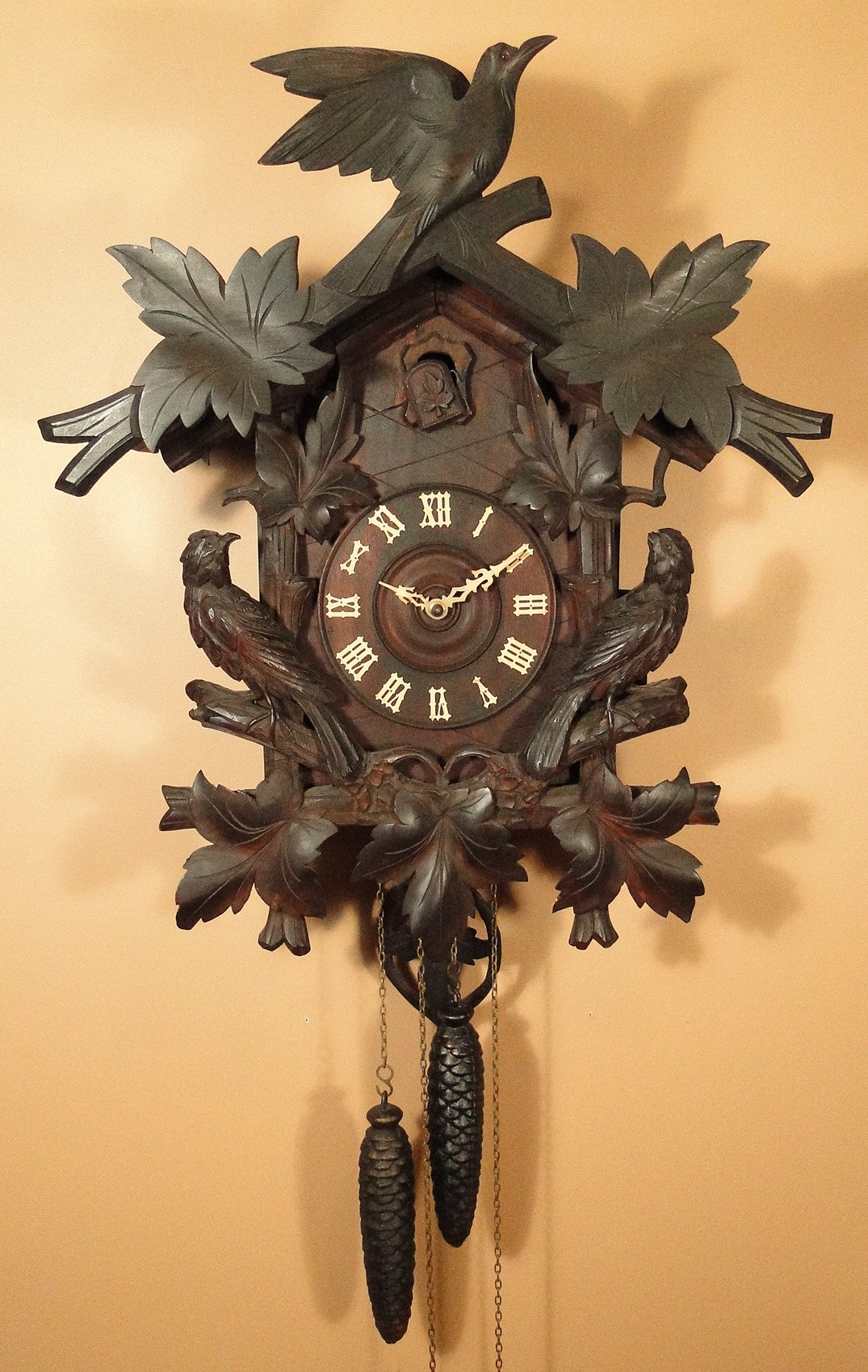
http://www.antiquesnavigator.com/ebay/images/2010/390169813609.jpg  

“Knowing your own darkness is the best method for dealing with the darknesses of other people.” -Carl Jung

There's a reason I choose to write about tough, damaged people: it's a subject I am intimately familiar with.

When I was fifteen, I was diagnosed with depression, among other things.  I was sent to a lock-down residential treatment center in the middle of a Utah cow pasture, where I lived for a year.  I met a lot of tough, damaged people, some of whom are probably still fighting their demons today. 

I won't detail the whole long, arduous journey back.  Not because I don't want to, but because I can't.  I'm still not really sure what happened.  It just suddenly hit me one day that the only person who was going to change my life was me.  So I did, and I've never looked back.

Still, it's a funny thing, a place like that.  You feel like you're never going to get out when you're there, but then one day you're suddenly sitting in a coffee shop, thinking back on the whole experience, marveling that it's over.  You spend a lot of time wondering if it actually is.

Institutionalization is a powerful thing.

You're not quite "normal" for a while.  It took me a full six months to be able to pee without asking permission.  And even once you get back to "normal", you're never quite the same.

You learn things that change you.  You can't bullshit a bullshitter.  Art forged from despair is the most powerful voodoo there is.  The best lie is the one that fools the liar.  No one can sabotage you better than you can sabotage yourself.  And sometimes in life, you have to find a place to stand.

But perhaps the most useful lesson I learned was how to read people.  Once you know the language of pain, you can recognize it anywhere, no matter what guise it takes.  This is a skill I've learned to temper in my daily interactions, but it's something I use constantly in my writing.

Everyone has a little of the darkness in them.  I explore mine more or less regularly.  I've learned to channel it now, but I remember when I couldn't, and it's made me a more empathetic writer.  When my characters are dealing with their own darkness, I know exactly where they live.

I also know they're going to come out of it.  After all, I did.

<!– start LinkyTools script –> <!– end LinkyTools script –>

Thursday, March 28, 2013

Thursday's Children Blog Hop: A Turn For The Tough


Source: Laura on Pinterest


"Strength does not come from physical capacity. It comes from an indomitable will." -Mahatma Gandhi

Since releasing All That Glitters into the wild, I've been doing a lot of thinking.

I know: uh-oh.

When I first got started on my writing journey, I knew I -Laura Oliva- was not just going to be a person anymore.  I was going to become a brand.  I also had more than just a general idea what I wanted that brand to be.   

Tender love stories, tough people.  

If you've heard that before, awesome.  That means I've been doing my job.

But lately I've had the nagging feeling my brand was getting somewhat diluted, at least on Writing In The Night.  Previously, I've centered my posts around various aspects of writing and business.  They've been great, it's been fun, but it hasn't really tied into my "brand identity".

The Thursday's Children blog hop has always been the exception.  The posts I write for my fellow hoppers are closer to my vision than anything else on my blog.  That's not to say they're contrived- far from it.  I've always believed the best brands derive their potency from a solid nugget of truth.  As it turns out, what inspires me fits right in with my professional "image".


That's why I've decided to make the rest of my blog more like what I do for TC.

What does "tough" look like?  I happen to believe "toughness" is a valuable quality.  It's a quality I've tried to cultivate personally, and it's a quality I admire in others.  It's a trait I seek out in plotlines, in dialogue, in setting.  It's the reason I choose to write the stories I do. 

But it's becoming increasingly rare in our modern, pampered world.  We've lost our mojo, guys, and it's tragic.  People don't know how to be tough anymore.  Maybe they've forgotten.  Or maybe they are, but don't realize it.  Either way, it's time we reminded ourselves just what we're made of.  

It's a tall order, I know, but I have a few ideas. 

Now when you come to Writing In The Night (and I hope you will), look for posts that explore what it means to be "tough".  I'll explore tough places.  Profile tough jobs.  Share ideas to get you out and exploring.  I'm planning more guest posts (if you have an idea and want to write one, hit me up!).

I hope you're excited about this.  I know I am!

    <!– start LinkyTools script –> <!– end LinkyTools script –>

Saturday, March 16, 2013

Day 7: Resources For Writers And Other Patients


"The greatest achievement of the human spirit is to live up to one's opportunities and make the most of one's resources." -Luc de Clapiers

Everyone needs resources.

I've had lots of help during this journey, in all different forms.  Books, people, websites.  There are a lot of resources available out there if you know where to look.  Of course, not everyone knows where to look.  

When I got started on my writing journey, I felt like I was adrift.  I knew there were resources out there, but I didn't know where, and I didn't know who to ask or how to find them.  I felt like I existed in a black hole, alone. 

So on the last day of my Launch Week series, I've compiled this list.  I've done a lot of legwork and found a lot of helpful resources.  Here are some of my favorites, for everything from writing to editing to building a business to staying motivated.  I hope they're as helpful to you guys as they have been to me.  

No trade secrets among friends, right?

Writing Resources
Sin and Syntax, by Constance Hale- grammar for the rest of us.  Funny and brilliantly helpful.
U.S. Dept. of Labor Occupational Outlook Handbook (online)- unless your main character is an heiress, she's going to need a job.  Check out this site.  Seriously, like, now.
The Emotion Thesaurus, by Becca Puglisi and Angela Ackerman
Please Understand Me II, by David Keirsey- an in-depth guide to the Meyers-Briggs personality types, and how your type influences your reactions to people, situations, etc.  If you find you have difficulty creating breathing, realistic, well-rounded characters, this will really help you.
King, Warrior, Magician, Lover, by Robert Moore, Douglas Gillette- an invaluable tool for me when creating the hero of my book.  A Jungian view of the various parts and archetypes of the male psyche.
Women's Anatomy of Arousal, by Sheri Winston CNM. RN. BSN. LMT- especially if you're planning on writing romances, it's helpful to know just what it is that gets women aroused, and what that arousal looks like. Men are pretty straightforward- women are slightly less so.  This book does an excellent job of de-mystifying women's erotic responses.
How To Write Hot Sex, edited by Shoshanna Evers- an anthology of different topics related to writing sex in erotica or romance, plus a helpful little article on self-publishing in the back.
Be A Sex-Writing Strumpet, by Stacia Kane- originally a blog series, combined into a book.  An incredibly detailed tutorial to writing sex scenes (which can be difficult, to say the least) 

Editing Resources
Self-Editing For Fiction Writers, Second Edition, by Renni Browne and Dave King- if you don't buy any other books on editing your novel, buy this one.
Revision and Self-Editing, by James Scott Bell

Self-Publishing Resources
Smashwords
Successful Self-Publishing, edited by Shoshanna Evers- I love Shoshanna Evers (as I'm sure you can tell).  She's incredibly nice, always helpful, and is brilliant at knowing what information new writers need to succeed.  This anthology compiles some of the best self-pub advice out there. Definitely worth seeking out! 
Becoming An Indie Author, by Zoe Winters- a funny, intimate, well-written guide for writers just stepping into the self-pub pool.  Recommended by Shoshanna Evers in How To Write Hot Sex, which is good enough for me.  The first book on self-publishing I bought, and still a favorite.

Networking Resources
Twitter- if you're a writer, especially if you're planning to self-publish, you should be on Twitter.  If you aren't, stop reading this, go over, and sign up. Now.  Then say "hi" to me- I'm @writermama 
World Literary Cafe- great resource for authors, readers, and bloggers.  Lots of networking opportunities.  Helps you find a support system and get in touch with the right people. 

Business Resources
How To Build An Author House, by Matthew Turner (a.k.a. Turndog Millionaire)- easily the best, most complete resource on author branding/marketing I've found yet.  Oh, yeah, and it's free!
What To Do Before Your Book Launch, by Randy Susan Meyers and M.J. Rose- originally meant for traditionally published authors, this book is a goldmine for the traditionally-published and the self-published alike.
Publicize Your Book, by Jacqueline Deval- referred to as the "marketing bible" in What To Do Before Your Book Launch.  How do you ignore a plug like that?

Personal/Motivational Resources   
Making A Literary Life, by Carolyn See- this book made me start to believe I could actually make a life and a living as a writer.
Women Who Run With The Wolves, by Clarissa Pinkola-Estes- food for the soul; obviously geared towards women, but a good read for anyone interested in Jungian psychology and getting in touch with their inner curandera/curandero.

Miss A Day Or Two?
Day 1: Lessons From The Cave
Day 2: Set Your Compass
Day 3: Don't Schedule, Manage
Day 4: You Gotta Hustle
Day 5: Feed The Current
Day 6: The Zen Of Balance 

Excerpt from All That Glitters:
 
Ava felt oddly jumpy as she headed back to the yurt, guitar in hand.  Ethan would be looking for her.  She hadn’t been prepared for the crushing desire that had taken over her thoughts.  Her body.  She didn’t know what to do about it.

Give in.

She stepped into a small side alley, heart pounding.  This was ridiculous.  She needed to get a grip.  She sagged against the side of a building and massaged her forehead.  What had she been thinking?

“You realize I know all the good hiding places in this town, right?”

Ava jolted.  Ethan stood at the front of the alley, a teasing grin on his face.  She glared at him.  “I wasn’t hiding.”

“Well, that’s a relief.”  He sauntered closer, hands in his pockets.  “Because the way I remember it, we have a gentleman’s agreement to settle.”

Ava stepped back.  She needed to keep some distance between them.  It was the only way she could think clearly.  “I’m not a gentleman.”

Ethan shrugged, still moving closer.  “I’m not, either.”

###

Available for purchase on Smashwords and Amazon